























An "anti-inflammatory diet" is not a defined medical diet. The best evidence supports a Mediterranean-style pattern: a 2014 meta-analysis of 17 trials found it lowered C-reactive protein by about 1 mg/l. That means vegetables, fruit, whole grains, legumes, nuts, olive oil and fish, with less ultra-processed food, sugar and salt.
What "inflammation" means, and why the word sells
Inflammation is part of how your body heals. When you cut a finger or catch a cold, immune cells release signalling molecules that cause redness, heat and swelling for a few days and then settle. That short-term response is essential.
The kind of inflammation diets claim to target is different: a low-grade, long-running rise in markers such as C-reactive protein (CRP) and interleukin-6 (IL-6) in the blood. It is linked with excess body fat, smoking, inactivity, poor sleep and chronic diseases such as heart disease and type 2 diabetes. It causes no obvious symptoms, which is exactly why it is easy to market. You cannot feel it, so you cannot tell whether a product has changed it.
On social media, "inflammation" has become a catch-all explanation for bloating, tiredness, weight gain, puffy skin and low mood. Some of those symptoms may have links to diet, but most have other causes, and a normal amount of water retention after a salty meal is not a disease process. Treat any post that diagnoses "inflammation" from a photo or a symptom checklist with suspicion.
So when you see "anti-inflammatory diet", ask two questions: anti-inflammatory according to which measurement, and in which people? The answers separate the evidence from the marketing.
Is there a defined anti-inflammatory diet?
No single plan has been tested under that name in large trials. What researchers have done is:
- Score diets for inflammatory potential. The Dietary Inflammatory Index (DII), developed at the University of South Carolina, was built by reading 1,943 studies on how 45 food parameters affect six inflammatory markers, including CRP, IL-6 and TNF-α. When applied to food data from 11 countries, scores ranged from +7.98 for the most pro-inflammatory diet to −8.87 for the most anti-inflammatory (Shivappa et al., Public Health Nutrition, 2014). The DII is a research tool for comparing populations, not a menu, and a better score in an observational study does not prove the diet caused the difference.
- Test whole dietary patterns in trials. Here the Mediterranean diet has the deepest evidence, both for inflammatory markers and for hard outcomes such as heart attacks and strokes.
In practice, the "anti-inflammatory diet" you will see on reputable hospital and university websites is the Mediterranean pattern, or something very close to it, renamed. Our full guide to the Mediterranean diet covers its history and variations; this article focuses on the inflammation claims.
What the evidence shows
Inflammatory markers
A 2014 systematic review and meta-analysis pooled 17 randomised trials with 2,300 adults, each lasting at least 12 weeks. Compared with control diets, Mediterranean-style diets lowered high-sensitivity CRP by 0.98 mg/l and IL-6 by 0.42 pg/ml, and improved flow-mediated dilatation, a measure of how well blood vessels relax (Schwingshackl and Hoffmann, Nutrition, Metabolism and Cardiovascular Diseases, 2014). The results varied a great deal between trials, with high statistical heterogeneity for CRP, so the size of the effect in any one person is uncertain.
For context, a change of this size is not something you would feel, and it is far smaller than the rise in CRP during an ordinary infection.
Heart attacks and strokes
The PREDIMED trial in Spain assigned 7,447 people aged 55 to 80 at high cardiovascular risk to a Mediterranean diet with extra-virgin olive oil, a Mediterranean diet with mixed nuts, or advice to cut dietary fat. After a median 4.8 years, major cardiovascular events occurred in 3.8% of the olive oil group, 3.4% of the nuts group and 4.4% of the control group. The original 2013 report was withdrawn after randomisation problems were found at some sites, and the reanalysis published in 2018 gave hazard ratios of 0.69 and 0.72 compared with the control diet (Estruch et al., New England Journal of Medicine, 2018).
That history matters: the strongest single trial behind the "anti-inflammatory" pattern had to be corrected, yet its main conclusion held up. That is what robust evidence looks like, and it is very different from a supplement with one small industry study.
What the evidence does not show
Neither study shows that a particular food "cures" inflammation, that cutting out one food group lowers it, or that the diet treats autoimmune disease on its own. The effects come from the whole pattern, usually alongside weight change, and are modest.
| Popular claim | What the evidence says | Verdict |
|---|---|---|
| A Mediterranean-style pattern lowers inflammatory markers | 17 trials, 2,300 adults: CRP down about 1 mg/l, IL-6 down slightly | Supported, modest effect |
| The pattern cuts heart attacks and strokes | PREDIMED reanalysis: about 30% fewer major events in high-risk adults | Supported |
| Turmeric or curcumin supplements fight inflammation | NIH: not enough evidence to conclude benefit for any health purpose; liver injury reported with some formulations | Not established |
| You must cut out gluten, dairy or nightshades | No trial evidence in people without coeliac disease or a diagnosed intolerance | Marketing |
| Diet alone can control inflammatory bowel disease | AGA 2024: no diet consistently reduces flares in adults | Not supported |
| Detox teas and juices "reduce inflammation" | No good evidence; may displace real food | Marketing |
Foods with the best evidence
Rather than "superfoods", think of food groups that recur in every high-scoring pattern. The World Health Organization's healthy diet fact sheet, updated in January 2026, gives a useful frame: at least 400 g of fruit and vegetables a day for everyone over 10, carbohydrates mainly from whole grains, vegetables, fruit and pulses, free sugars below 10% of energy, saturated fat no more than 10%, and less than 5 g of salt a day for adults (WHO, healthy diet).
Within that frame, the foods most associated with lower inflammatory scores are:
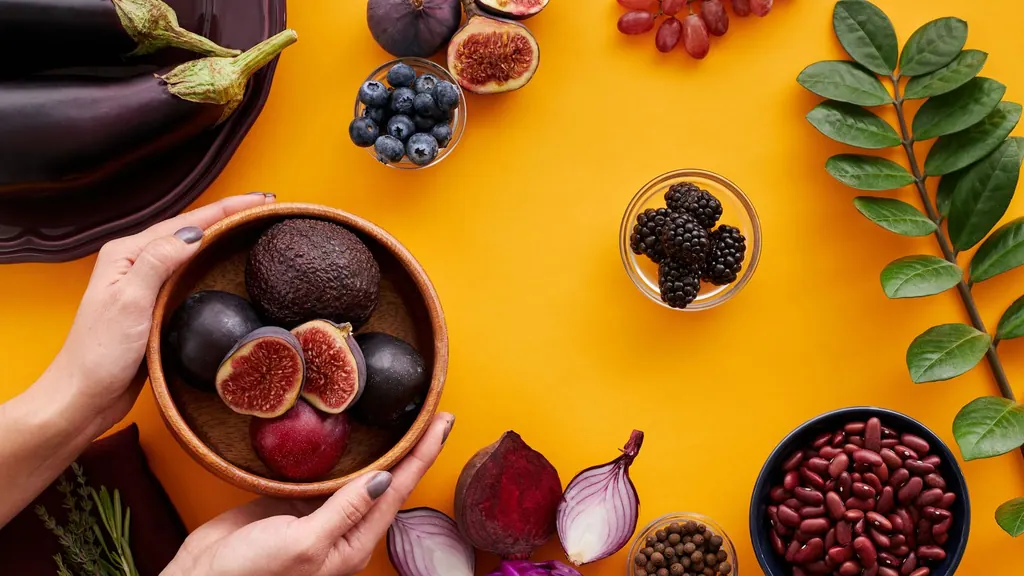
- Vegetables and fruit, in variety. No single fruit is "best for inflammation". Different colours bring different plant compounds, so variety matters more than chasing one berry.
- Whole grains and pulses. Oats, barley, wholemeal bread, brown rice, beans, lentils and chickpeas bring fibre, which feeds gut bacteria. Our fibre calculator shows how close you are to a useful daily amount.
- Nuts, seeds and extra-virgin olive oil. These were the two foods given out in PREDIMED.
- Fish, especially oily fish. The NHS recommends at least two portions of fish a week, one of them oily, with a portion around 140 g cooked; girls and women who may become pregnant should have no more than two portions of oily fish a week (NHS, fish and shellfish).
- Herbs and spices in cooking, including turmeric, ginger and garlic, as flavour rather than medicine.
What not to eat during inflammation
"What not to eat" depends on what kind of inflammation you mean.
For long-term, low-grade inflammation, the patterns that score worst lean on ultra-processed foods, sugary drinks, refined grains, processed meat and alcohol. WHO's limits on free sugar, salt and saturated fat are a sensible ceiling. You do not need to ban these foods; you need them to stop being the base of your diet.
During an acute illness or flare, the advice is different. With a stomach bug or a flare of a gut condition, high-fibre raw vegetables may make symptoms worse, and the goal becomes eating enough and staying hydrated. Never stop eating or follow a very restrictive plan during illness without advice.
For a diagnosed condition, follow condition-specific advice. People with coeliac disease must avoid gluten; people with gout get specific guidance on purines and alcohol; people with kidney disease may need to limit potassium, phosphorus or protein. A general "anti-inflammatory" list can conflict with these rules.
The best diet for IBD: what guidelines say
Inflammatory bowel disease (IBD), meaning Crohn's disease and ulcerative colitis, is a condition where the word "inflammation" is literal and visible on a colonoscopy. It is also where diet myths can do real harm.
In March 2024 the American Gastroenterological Association published best practice advice on diet in IBD. Its first statement is that, unless there is a contraindication, all patients with IBD should be advised to follow a Mediterranean diet rich in fresh fruit and vegetables, monounsaturated fats, complex carbohydrates and lean proteins, and low in ultra-processed foods, added sugar and salt. It is equally clear about the limits: "No diet has consistently been found to decrease the rate of flares in adults with IBD." A diet low in red and processed meat may reduce ulcerative colitis flares but has not been found to reduce relapse in Crohn's disease (AGA Clinical Practice Update, Gastroenterology, 2024).
The same update gives practical points that a generic online plan will miss:
- people with narrowed sections of bowel (strictures) may not tolerate raw, fibrous plant foods, so cooking and processing fruit and vegetables to a softer texture helps them keep plant foods in the diet;
- exclusive liquid enteral nutrition is an effective therapy to induce remission in Crohn's disease, with stronger evidence in children than adults;
- everyone with IBD should be screened for malnutrition and monitored for vitamin D and iron deficiency, and for vitamin B12 deficiency after ileal disease or surgery;
- complicated IBD warrants co-management with a registered dietitian, and all newly diagnosed patients should have access to one.
The AGA notes that its statements combine a literature review with expert opinion and are not formally graded, but the direction is clear: a varied, minimally processed diet, adapted for texture and nutrient gaps, managed alongside medical treatment.
Restrictive diets and disordered eating risk
The most popular anti-inflammatory plans online are often elimination diets dressed in health language: no gluten, no dairy, no sugar, no nightshades, no grains, no seed oils. Some go further, into the territory covered in our review of paleo, keto and carnivore diets.
Two problems follow. First, cutting whole food groups without a diagnosis removes foods with evidence of benefit, such as whole grains, pulses and dairy, while adding none. Second, a list of forbidden foods can feed anxiety about eating. The NHS lists "having very strict habits or routines around food", eating very little and worrying a lot about weight and body shape among the signs of an eating disorder, and advises seeing a GP as soon as you can if you recognise them. In the UK, the eating disorder charity Beat runs a helpline on 0808 801 0677 (NHS, eating disorders).
If a plan makes you afraid of ordinary foods, leaves you hungry most of the day or takes over your social life, stop and talk to a GP or registered dietitian. An eating pattern that reduces inflammation markers by a fraction of a milligram is not worth that cost.
The same caution applies to stacking trends. Combining an anti-inflammatory elimination list with long fasting windows or a hormone-themed plan quickly becomes very restrictive. Our articles on intermittent fasting and the so-called cortisol diet look at those claims separately.
Supplements marketed as anti-inflammatory
Turmeric, curcumin, fish oil, ginger and "inflammation support" blends fill a large part of the supplement aisle. The US National Center for Complementary and Integrative Health says "we don't know enough to definitively conclude if turmeric or curcumin is beneficial for any health purposes". Early evidence for knee osteoarthritis is positive but needs higher-quality trials. It also warns that highly bioavailable curcumin formulations may harm the liver, that liver damage has been reported in people taking them, and that turmeric supplements in pregnancy may be unsafe (NCCIH, turmeric).
The food-first argument wins here. Turmeric in a curry or oily fish twice a week carries no realistic risk; concentrated extracts can, and they can interact with medicines. If you take regular prescriptions, check with a pharmacist before adding any herbal product.
A practical week of anti-inflammatory meals
This is an example week built on the Mediterranean pattern. It is not calorie-counted; portions depend on your needs, which our calorie calculator can estimate. Swap meals freely and repeat the ones you like.
| Day | Breakfast | Lunch | Evening meal |
|---|---|---|---|
| Monday | Porridge with berries and ground flaxseed | Lentil and vegetable soup, wholemeal bread | Baked salmon, new potatoes, green beans |
| Tuesday | Greek yoghurt, walnuts, sliced pear | Chickpea, tomato and cucumber salad with olive oil | Wholewheat pasta with tomato, spinach and white beans |
| Wednesday | Wholegrain toast with peanut butter and banana | Leftover pasta with a side salad | Chicken and vegetable stir-fry with brown rice |
| Thursday | Overnight oats with seeds and grated apple | Sardines on wholegrain toast, cherry tomatoes | Bean and vegetable chilli with brown rice |
| Friday | Scrambled eggs, grilled tomatoes, wholegrain toast | Leftover chilli in a wholemeal wrap | Mackerel or tofu tray bake with peppers and courgettes |
| Saturday | Yoghurt with oats, frozen berries and almonds | Vegetable omelette and salad | Homemade pizza on a wholemeal base with lots of vegetables |
| Sunday | Wholegrain pancakes with fruit | Roast chicken or nut roast, roast vegetables, greens | Light meal: soup, bread and fruit |
Snacks can be fruit, a small handful of nuts, hummus with vegetable sticks, or plain yoghurt. Cook with extra-virgin olive oil, flavour with herbs and spices, and keep sugary drinks, processed meats and ultra-processed snacks occasional. Two oily-fish meals in this example sit within the NHS limit for women who may become pregnant.
How to start, and when to get help
- Check your current pattern. Our healthy eating check gives a quick picture of your fruit, vegetable, whole-grain and processed-food balance.
- Add before you remove. Aim for an extra portion of vegetables and one more pulse-based meal a week before you cut anything.
- Swap your fats. Use olive oil instead of butter for most cooking and add nuts or seeds daily.
- Plan two fish meals a week, or a plant alternative if you do not eat fish.
- Keep perspective. Sleep, physical activity, not smoking and a healthy weight all affect inflammatory markers too. Our weight management pages cover that side, and our guide to the new food pyramid explains how current guidelines fit together.
If you have IBD, arthritis, an autoimmune condition, kidney disease or a history of disordered eating, do not follow a generic plan. Book a session with a registered dietitian, who can adapt the pattern to your diagnosis, medicines and blood results.
Try the free healthy eating check
Frequently asked questions
What are some examples of anti-inflammatory meals?
Good examples follow the Mediterranean pattern: porridge with berries and seeds, lentil soup with wholemeal bread, baked salmon with potatoes and green vegetables, bean chilli with brown rice, or wholewheat pasta with tomatoes, spinach and white beans. Cook with olive oil and use herbs and spices. The pattern across the week matters more than any single meal.
What not to eat during inflammation?
For long-term health, limit ultra-processed foods, sugary drinks, refined grains, processed meat, excess salt and alcohol, the foods most linked to poorer diet scores. During an acute illness or a gut flare, the priority changes to eating enough and staying hydrated, sometimes with softer, lower-fibre foods. If you have a diagnosed condition, follow the specific advice from your care team.
What fruits are best for inflammation?
No single fruit has been proven best. Trials supporting anti-inflammatory eating tested whole patterns with plenty of varied fruit and vegetables, not one fruit. The World Health Organization recommends at least 400 g of fruit and vegetables a day for everyone over 10. Mix colours, include berries, citrus, apples and pears, and choose whole fruit over juice.
What is the best diet for IBD?
The American Gastroenterological Association's 2024 update advises that, unless there is a contraindication, people with IBD follow a Mediterranean diet low in ultra-processed foods, added sugar and salt. It also says no diet consistently reduces flares in adults. People with strictures may need softer textures, and everyone with IBD benefits from access to a registered dietitian.
Does an anti-inflammatory diet help you lose weight?
Not automatically. The Mediterranean pattern is filling and high in fibre, which can make it easier to eat less, but olive oil, nuts and fish are energy-dense. Weight loss depends on overall intake. Some of the reduction in inflammatory markers seen in trials may come with weight loss, so the two goals work well together.
Should I take turmeric for inflammation?
The US National Center for Complementary and Integrative Health says there is not enough evidence to conclude that turmeric or curcumin benefits any health purpose, though early arthritis results are positive. Highly absorbable curcumin products have been linked to liver injury, and supplements may be unsafe in pregnancy. Using turmeric in cooking is fine; check with a pharmacist before supplements.
How long does an anti-inflammatory diet take to work?
Trials in the 2014 meta-analysis lasted at least 12 weeks before measuring changes in markers such as C-reactive protein. You are unlikely to feel any difference in inflammation itself, although energy and digestion may change sooner as fibre and food quality improve. Think in months and years, not days, and treat quick-fix promises with suspicion.