























"Food is medicine" means providing nutritious food through the health system to prevent or manage diet-related disease. The main models are produce prescriptions, medically tailored groceries and medically tailored meals. Evidence is strongest for tailored meals in very sick patients, where a 2026 randomised trial cut hospital and emergency visits by 28%, and more mixed for less intensive programmes.
What "food is medicine" means
The phrase is used loosely online, often to mean that eating well keeps you healthy. In health policy it has a narrower meaning: food, chosen and delivered for a medical reason, becomes part of a person's care. The US Department of Health and Human Services (HHS) describes it simply: "Food Is Medicine means that food and nutrition can help improve health", through approaches that combine nutritious food with human services, education and policy change, delivered by health care and community organisations working together (HHS Office of Disease Prevention and Health Promotion, Understanding Food Is Medicine).
The idea has grown fastest in the United States, where it sits at the meeting point of two problems: high rates of diet-related chronic disease, and millions of households who cannot reliably afford a healthy diet. Our guide to food insecurity explains the second problem; this article is about the programmes that try to close the gap through clinics, hospitals and health insurers. For the wider national context, see our United States country guide.
The main types of programme
HHS groups food is medicine interventions along a spectrum, from broad population programmes to intensive support for very sick patients (HHS, Types of Food Is Medicine interventions).
| Intervention | What people receive | Who it is designed for | Typical evidence so far |
|---|---|---|---|
| Population-level programmes | Better access to healthy food across a community, for example SNAP, WIC and school meals | Whole communities | Large programmes with long track records; health effects vary by programme |
| Nutrition education and counselling | Skills, knowledge and confidence to eat well, often from a dietitian | Individuals seeking support | Well established as part of medical nutrition therapy |
| Produce prescriptions | Vouchers, cards or credit to buy fruit and vegetables | People at risk of, or living with, diet-related conditions | Mostly before-and-after studies; promising, but few controlled trials |
| Medically tailored groceries | Curated food packages matching a prescribed nutrition plan | People with serious or complex conditions who can still cook | Limited, mixed trial evidence |
| Medically tailored meals | Fully prepared meals designed for a medical condition | People with serious illness who struggle to shop or cook, such as heart failure, cancer, kidney disease or HIV | Strongest evidence, including randomised trials |
What is a produce prescription?
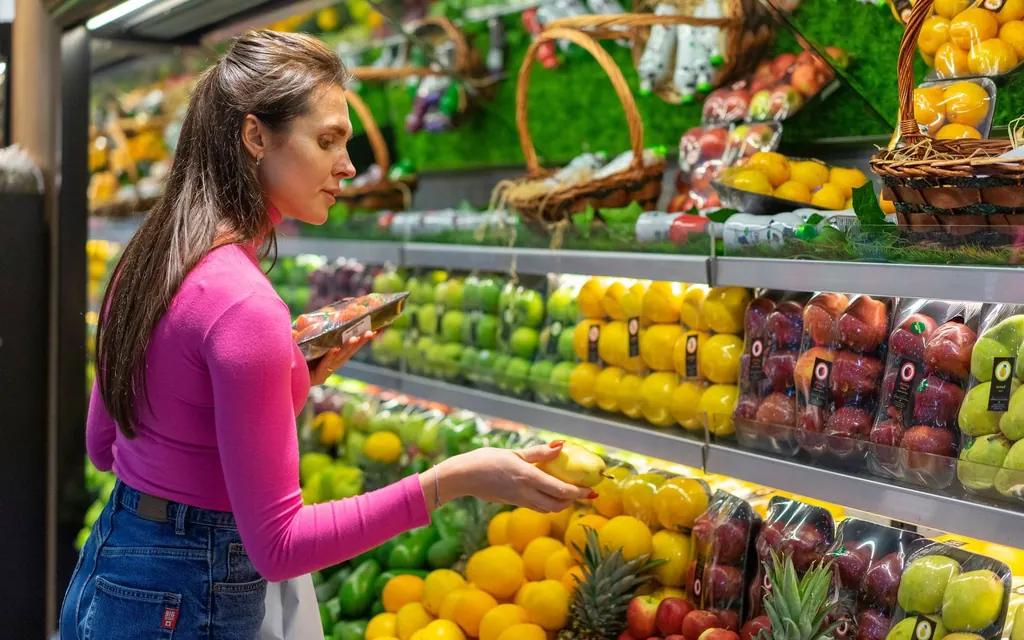
A produce prescription is a programme, usually run through a clinic or health plan, that gives patients a set amount of money to spend on fruit and vegetables, at a grocery store, market or farmers' market. HHS describes these programmes as "designed to increase access to fruits and vegetables among individuals at risk for or living with diet-related conditions". A clinician refers the patient, and the programme often adds cooking demonstrations or nutrition education.
What are medically tailored meals?
Medically tailored meals are "fully prepared meals" designed to fit a person's diagnosis, such as lower-sodium meals for heart failure or meals adjusted for kidney disease. Medically tailored groceries are "curated packages of foods and ingredients" for people who can still prepare meals but need the right ingredients. Both are usually planned or overseen by a registered dietitian, who adjusts the meals to the person's treatment plan. If you work with these patients, our guides to the renal diet and the heart failure diet cover the nutrition principles behind the meals.
What the evidence shows
The research base is growing quickly, but its quality varies. The key distinction is between studies that compare people before and after a programme, and randomised trials that compare them with a similar group who did not get the programme.
Produce prescriptions: promising, mostly uncontrolled
The largest multisite evaluation pooled data from 22 produce prescription sites in 12 US states between 2014 and 2020, covering 2,064 adults and 1,817 children from clinics serving low-income neighbourhoods. Programmes gave a median of $63 a month for four to ten months. After a median of six months, adults ate 0.85 more cups of fruit and vegetables a day and children 0.26 more cups; the odds of food insecurity fell by about a third; among adults with an HbA1c of 6.5% or higher, HbA1c fell by 0.29 percentage points; and among adults with hypertension, systolic blood pressure fell by 8.38 mm Hg (Hager and colleagues, Circulation: Cardiovascular Quality and Outcomes 2023).
Those results are encouraging, but the study had no control group. People are often enrolled when their readings are at their worst, and readings tend to drift back towards normal on their own, so some of the improvement may not be due to the programme.
A cautionary randomised trial
That risk is exactly what a 2024 randomised trial found. Researchers randomised 500 adults with type 2 diabetes, an HbA1c of 8% or higher and food insecurity to an intensive food-as-medicine programme straight away or six months later. The programme provided healthy groceries for 10 meals a week for the whole household, plus dietitian consultations, nurse evaluations, health coaching and diabetes education. Both groups' HbA1c fell substantially by six months, and the difference between them, 0.10 percentage points, was not significant. The programme did increase dietitian visits (2.7 versus 0.6 on average) and prescriptions for metformin and GLP-1 medicines, and more participants reported a better diet (Doyle and colleagues, JAMA Internal Medicine 2024). The authors concluded that programmes targeting people with high readings need a control group to show they work.
Medically tailored meals: the strongest signal
The evidence is more consistent for medically tailored meals given to very sick patients. A Massachusetts study linked insurance claims with records from a non-profit meal provider and compared 499 recipients with 521 matched non-recipients. Meal recipients, who received 10 meals a week under a registered dietitian's supervision, had about half the rate of inpatient admissions (incidence rate ratio 0.51), and estimated mean monthly health care costs, including the cost of the programme, were $3,838 compared with $4,591 (Berkowitz and colleagues, JAMA Internal Medicine 2019). Because it was observational, the authors used statistical methods to reduce bias, but they could not rule it out completely.
Randomised evidence is now arriving. The MUTTON-HF trial, run in 2025 at two Indian Health Service sites in rural Navajo Nation, randomised 206 adults with heart failure to eight weeks of culturally and medically tailored meals using traditional Navajo foods, or to usual dietary advice. Within 90 days, 40.6% of the meal group had a hospitalisation or emergency department visit, against 57.0% of the usual-care group, a relative risk of 0.72. Hospitalisations specifically fell from 26.0% to 12.3%, and quality of life, food security, weight and blood pressure all improved more in the meal group (MUTTON-HF trial, JAMA Internal Medicine, September 2026).
A programme that "improves HbA1c" in a before-and-after study may simply be catching people at their worst moment. When you read food is medicine results, look for a control group, the length of follow-up, and whether the outcome was a lab value, a hospital admission or a cost.
Do medically tailored meals save money?
This is the question health plans care about most, and the honest answer is: possibly, for the right patients.
The 2019 Massachusetts study suggests lower total spending even after paying for the meals. A modelling study then estimated what would happen if US insurers covered medically tailored meals nationally for adults with a diet-sensitive condition and a limitation in daily activities, about 6.3 million people in 2019. It projected that in the first year about 1.6 million hospitalisations and $38.7 billion in health care spending could potentially be avoided, against programme costs of $24.8 billion, for net savings of $13.6 billion. The uncertainty range was wide, from $0.2 billion to $28.5 billion (Hager and colleagues, JAMA Network Open 2022).
Those figures are estimates from a model, not observed savings, and they depend on effect sizes from earlier studies. Savings are most plausible where hospital admissions are frequent and expensive, as in heart failure, advanced kidney disease and cancer. For people with milder conditions, the case rests more on better health and quality of life than on lower bills.
Does insurance cover food as medicine?
Coverage in the United States is patchy and changing. The main routes are these.
Medicare Advantage
Since the Bipartisan Budget Act of 2018, private Medicare Advantage plans can offer extra benefits to chronically ill members. CMS guidance from April 2019 says "food and produce to assist chronically ill enrollees in meeting nutritional needs may be covered" as one of these Special Supplemental Benefits for the Chronically Ill, including items such as produce, frozen foods and canned goods, and that meals may be offered beyond a limited basis, home-delivered or in a group setting (CMS memo, Implementing Supplemental Benefits for Chronically Ill Enrollees, 24 April 2019). These benefits are optional, so whether a plan offers them, and to whom, varies.
Medicaid
Medicaid's role depends on each state, which can ask federal regulators for approval to cover services beyond standard medical care, for example through section 1115 demonstrations. Federal guidance on this has shifted. In November 2023 and December 2024, CMS issued bulletins on covering services that address "health-related social needs". On 4 March 2025, the Centers for Medicare & Medicaid Services rescinded both bulletins and said it would consider states' applications "on a case-by-case basis" (CMS, CMCS Informational Bulletin, 4 March 2025). If you are planning a programme or advising patients, check your state's current Medicaid rules directly.
Research funding and philanthropy
Much of the field still runs on grants. In September 2022 the Rockefeller Foundation and the American Heart Association announced plans to "mobilize $250 million to build a national Food is Medicine Research Initiative" to generate evidence and tools for the health sector (Rockefeller Foundation, 28 September 2022). Federally, HHS's catalogue of NIH-supported food is medicine research lists 22 projects worth $18.4 million in fiscal year 2025, up from 13 projects worth $6.9 million in fiscal year 2022 (HHS, Catalog of NIH-supported Food Is Medicine research, 2022 to 2025).
Coverage by other private insurers varies from plan to plan. For the separate question of whether insurers pay for appointments with a dietitian, see our guide to whether insurance covers a dietitian.
The policy debate
Food is medicine has broad support, but it attracts several criticisms worth taking seriously.
- Medicalising poverty. If people cannot afford healthy food, some argue the answer is income support and cheaper food, not prescriptions. Supporters reply that the health system already pays for the consequences, so it has a reason to act.
- Scale. Intensive meal programmes are costly per person and reach relatively few people compared with the number living with diet-related disease. That is why HHS puts population programmes such as SNAP, WIC and school meals at the base of the spectrum.
- Evidence quality. As the 2024 diabetes trial showed, enthusiastic before-and-after results do not always survive a control group.
- What counts as "healthy". Programmes must decide what to provide. Debates about ultra-processed foods, seed oils and the new US food pyramid all feed into those choices, and food is medicine features in the federal health agenda described in our article on the MAHA report.
Outside the United States, the same goals are often pursued through population policy rather than prescriptions. Brazil, for instance, takes a whole-population, food-based approach through its national dietary guidance, which our Brazil country guide explains.
Where dietitians fit
Dietitians are central to most food is medicine models, not an add-on. In the trials above, registered dietitians supervised meal design, provided consultations, and adjusted plans as treatment changed. In practice, the roles include:
- Designing menus that meet sodium, protein, potassium, fluid and texture targets for each condition.
- Screening and referral, identifying patients who would benefit and checking that they meet programme criteria.
- Counselling, so that food support is paired with the skills to keep eating well after the programme ends.
- Medication safety, for example when better food access changes insulin or blood pressure needs.
- Evaluation, collecting outcomes so that programmes can show whether they work.
These skills overlap with medical nutrition therapy, and they are increasingly in demand in health systems and community organisations; our nutrition jobs board lists current openings. For diabetes in particular, our guide to working with a dietitian for diabetes explains what individual care adds to any food programme.
What it means for you
If you are a patient, ask your doctor, hospital or health plan whether they run a produce prescription or meal programme, and whether you qualify. If you have a chronic condition and money is tight, say so: it changes the help you can be offered. While you wait for a referral, the free healthy eating check gives a quick score of your current diet and the changes likely to matter most.
A registered dietitian can build food support around your diagnosis, budget and kitchen, and work with your care team on the rest.
Book a session with a dietitian
Frequently asked questions
What is a produce prescription?
A produce prescription is a programme in which a clinician refers a patient with, or at risk of, a diet-related condition to receive money, vouchers or a card for fruit and vegetables. Patients spend it at stores or markets, often with nutrition education alongside. A 2023 evaluation of 22 US sites found higher fruit and vegetable intake and lower food insecurity, though it had no control group.
Do medically tailored meals save money?
They may, for very sick patients. A 2019 Massachusetts study found recipients had about half the hospital admission rate and lower monthly health care costs, including the meals, than matched non-recipients. A 2022 model estimated $13.6 billion in first-year US net savings from national coverage, but with a wide uncertainty range. Savings are most likely in conditions with frequent hospital stays.
Does insurance cover food as medicine?
Sometimes. In the US, Medicare Advantage plans may offer food and produce benefits to chronically ill members, and some state Medicaid programmes fund nutrition supports through waivers, although federal guidance changed in March 2025. Other private insurance varies. Ask your plan directly, as benefits vary by plan, state and year.
Is food is medicine proven to work?
It depends on the programme. Medically tailored meals for people with serious illness have the strongest evidence, including a 2026 randomised trial in heart failure that cut hospital and emergency visits. Produce prescriptions show promising results in uncontrolled studies, but a 2024 randomised trial of an intensive grocery programme found no greater HbA1c improvement than usual care.
Who qualifies for medically tailored meals?
Usually people with serious or complex conditions, such as heart failure, cancer, kidney disease, advanced diabetes or HIV, who have difficulty shopping for or preparing food. Eligibility is set by each programme or health plan and may also depend on income or recent hospital stays. A doctor, nurse or dietitian normally makes the referral.
What is the difference between medically tailored meals and groceries?
Medically tailored meals are fully prepared and ready to eat, designed for a specific condition. Medically tailored groceries are curated packages of foods and ingredients that let people cook meals matching their prescribed nutrition plan. Groceries suit people who can still cook; meals suit those who are too unwell or limited to prepare food.