























The best high-protein snacks are everyday foods: Greek yoghurt, cottage cheese, eggs, canned fish, edamame, nuts and cheese. A 170 g pot of plain Greek yoghurt gives about 17 g of protein, based on USDA data. Most adults need about 0.8 g of protein per kg a day; older adults and people on GLP-1 medicines may need more.
Do you actually need high-protein snacks?
Protein has become the nutrient of the decade. Shops now sell protein-branded versions of everything from cereal to water. Before you buy any of it, it helps to know what you need and whether snacks are the right place to get it.
For the general adult population, the recommended daily allowance is 0.8 g of protein per kilogram of body weight. A 2025 joint advisory from four US obesity and nutrition organisations notes that this reference value "is currently undergoing review", and that higher targets of 1.2 to 1.6 g/kg a day "have also been proposed during active weight reduction" (Mozaffarian and colleagues, joint advisory on GLP-1 nutrition). The same document warns that prolonged intakes at or above 2 g/kg a day "should be avoided due to potential adverse health effects".
So is the protein boom overdone? For many healthy younger adults who already eat a varied diet, probably yes: an extra protein bar is unlikely to change much. For other groups the case is stronger:
- Older adults. The PROT-AGE study group recommends at least 1.0 to 1.2 g/kg a day for people over 65, 1.2 g/kg or more for those who exercise, and 1.2 to 1.5 g/kg for most older adults with acute or chronic illness (Bauer and colleagues, PROT-AGE, 2013).
- People losing weight, including those on GLP-1 medicines, where appetite is low and muscle is at risk.
- Athletes and people doing regular strength training.
The right number depends on your weight, age, activity and health. Our free protein calculator gives you a personal target, and our guide to how much protein you need explains the reasoning in detail. If your target is already met by meals, snacks can stay simple. If it is not, a well-chosen snack is often the easiest gap to fill.
Protein and fibre in common snacks
The figures below are calculated from per-100 g values in the US Department of Agriculture's FoodData Central database (USDA FoodData Central), using the portions shown. Brands vary, so check the label on the product you buy.
| Snack | Portion | Protein (g) | Fibre (g) | Good for |
|---|---|---|---|---|
| Canned light tuna in water, drained | 100 g | 25.5 | 0 | Desk lunch, high-protein top-up |
| Edamame beans, cooked | 150 g | 17.9 | 7.8 | Plant protein plus fibre |
| Plain non-fat Greek yoghurt | 170 g pot | 17.5 | 0 | GLP-1 users, breakfast or evening |
| Cottage cheese, 2% fat | 150 g | 15.6 | 0 | Soft, easy to eat with low appetite |
| Hard-boiled eggs | 2 eggs (about 100 g) | 12.6 | 0 | Portable, cheap to prepare at home |
| Reduced-fat (2%) milk | 250 g (a large glass) | 8.3 | 0 | Post-exercise, children |
| Dry-roasted peanuts, unsalted | 30 g | 7.3 | 2.5 | Bag or desk drawer |
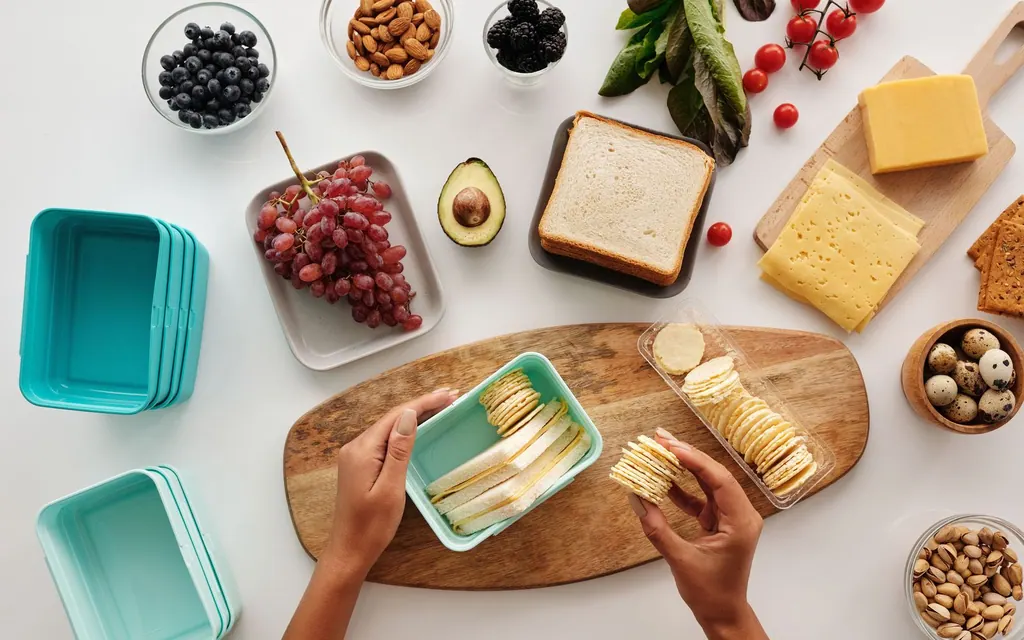
| Cheddar cheese | 30 g | 7.3 | 0 | Lunchboxes, with fruit or crackers |
| Almonds | 30 g | 6.4 | 3.8 | Portable, adds fibre |
| Hummus | 60 g | 4.7 | 3.3 | With vegetable sticks for fibre |
Two patterns stand out. Dairy, eggs and fish give the most protein per portion but no fibre. Beans, nuts and seeds give less protein per portion but bring fibre with it. The best snacks often combine one from each group: yoghurt with a handful of nuts, hummus with edamame, cheese with an apple. If you are trying to raise your fibre at the same time, our high-fibre foods list suggests easy pairings.
Nuts and cheese are energy-dense. That is useful if your appetite is small, but if you are managing your weight, weigh a portion once so you know what 30 g looks like. Our calorie calculator helps you see how snacks fit into your daily energy needs.
What snack is the highest in protein?
Among the everyday whole foods in the table, canned fish comes out on top, with about 25 g of protein in 100 g of drained light tuna. Concentrated products, such as protein powders and some bars, can contain more per serving, but they are manufactured foods rather than snacks in the usual sense. Our review of protein powder covers when a shake makes sense and what to check on the label.
"Highest" is not always "best". A snack with 25 g of protein that you will not eat, or that pushes out your lunch, is less useful than a 12 g snack you enjoy and can carry.
How to get 30 g of protein in a snack
You can, but ask whether you need to. The 2016 joint position statement on nutrition and athletic performance recommends about 0.25 to 0.3 g of protein per kilogram of body weight, or 15 to 25 g for most athletes, after key exercise sessions and every 3 to 5 hours across meals (Thomas and colleagues, Dietitians of Canada). It adds that higher doses, above 40 g, "have not yet been shown to further augment" muscle protein synthesis.
For most people, then, 15 to 25 g is an effective snack-sized dose. If you are large, very active or cutting calories and need more, these combinations reach about 30 g, using the table figures:
- 100 g drained tuna with 60 g hummus on wholegrain crackers: about 30 g.
- 150 g cottage cheese with 150 g edamame: about 33 g.
- 170 g Greek yoghurt, 30 g almonds and a glass of milk (250 g): about 32 g.
Each of these is closer to a small meal than a snack. That is fine if it replaces something rather than adding on top.
How to get 100 g of protein a day
Whether 100 g is right depends on your size. At the 0.8 g/kg allowance, 100 g a day is what a person weighing about 125 kg would need; at 1.2 to 1.6 g/kg, it suits someone weighing roughly 63 to 83 kg. The GLP-1 advisory suggests that an absolute target of 80 to 120 g a day may help people stick to their plan when body-composition data are not available.
Snacks alone rarely get you there. Build protein into each meal first, then use snacks for the gap. As an illustration, using only foods from the table:
- Breakfast: 170 g Greek yoghurt topped with 30 g almonds (about 24 g).
- Lunch: 100 g tuna with 60 g hummus in a wholegrain wrap (about 30 g from the tuna and hummus).
- Afternoon snack: 2 hard-boiled eggs (about 13 g).
- Dinner: 150 g edamame as a side (about 18 g), plus the protein in your main dish.
- Evening: 150 g cottage cheese (about 16 g).
That reaches about 100 g before you count the protein in bread, grains and the rest of your dinner. Use your own result from the calculator, and adjust portions rather than adding supplements by default.
Do high-protein snacks help with weight loss?
Modestly. A meta-analysis of 24 trials with 1,063 adults on calorie-restricted diets found that higher-protein diets produced 0.79 kg more weight loss and 0.87 kg more fat loss than standard-protein diets, and protected 0.43 kg of fat-free mass, over an average of about 12 weeks (Wycherley and colleagues, American Journal of Clinical Nutrition, 2012). Greater fullness was reported in 3 of the 5 studies that measured it.
Those are real but small differences, and they came from whole diets, not from adding snacks. A protein snack helps weight loss only if it replaces something less filling or stops you overeating later. A protein bar eaten on top of your usual diet adds energy. Our weight management hub explains what works over the long term.
Many protein bars and "high-protein" desserts use sweeteners called polyols, such as maltitol or sorbitol. In the UK and EU, foods with more than 10% added polyols must carry the warning "excessive consumption may produce laxative effects" (retained Regulation (EU) No 1169/2011, Annex III). If bars upset your stomach, check the ingredients.
High-protein snacks for GLP-1 users
GLP-1 medicines such as semaglutide reduce appetite, which is how they work, but they also make it harder to eat enough protein. The joint advisory reports that in the STEP 1 trial, of an average 13.6 kg weight reduction, 8.3 kg (62%) was fat and 5.3 kg (38%) was lean body mass. Because muscle is about half of lean mass, the authors estimate that around 20% of the weight lost was muscle.
The advisory's practical suggestions translate well into snacks:
- Choose "lower volume, nutrient-dense protein foods" such as fish, eggs, Greek yoghurt, cottage cheese and nuts or seeds, including peanut or almond butter.
- Eat protein first at meals, to make sure it goes in before you feel full.
- Use small, frequent meals when hunger is low. Smoothies made with yoghurt or milk, cottage cheese and soups are often easier than heavy foods.
- Shakes and fortified products can help some people meet targets, but they are a backup, not the default.
- Pair protein with strength training. The advisory says structured resistance training is well established to help preserve lean mass during weight reduction.
The advisory notes that smoothies, cottage cheese and soups are "often more appealing" than heavier foods such as red meat, cold cuts or hard cheese when appetite is low. Our full guide to nutrition on GLP-1 weight-loss medicines covers side effects, fibre, fluids and micronutrients.
Snacks for athletes and active people
The 2016 position statement says athletes generally need 1.2 to 2.0 g of protein per kg a day, with higher intakes sometimes useful for short periods of intensified training or when cutting calories. It recommends spreading moderate amounts of high-quality protein through the day rather than relying on one large serving.
Practical choices after training:
- a large glass of milk or a milk-based smoothie;
- Greek yoghurt with fruit and oats;
- a tuna or egg sandwich on wholegrain bread;
- edamame or a bean salad for a plant-based option.
Carbohydrate matters too after hard sessions, so pair protein with fruit, bread, oats or rice. Many athletes also take creatine, which is not a protein but often sits alongside protein products. The International Society of Sports Nutrition calls creatine one of the most studied supplements and reports that short- and long-term use is "safe and well-tolerated in healthy individuals" (Kreider and colleagues, ISSN, 2017). The same review covers research on creatine in ageing and other clinical uses; our guides to creatine monohydrate and creatine side effects look at the evidence for both.
Snacks for children
Children need protein for growth, but MedlinePlus notes that children and teens "may need different amounts, depending on their age", and protein-fortified products designed for adults are rarely necessary (MedlinePlus). Ordinary foods do the job: milk, yoghurt, cheese, eggs, hummus, beans and nut butters.
Two safety points matter. First, the NHS says whole nuts "should not be given to children under 5 years old, as they can choke on them", although crushed or ground nuts and nut butter spread on toast are fine from weaning (NHS). Second, some flavoured yoghurts and snack bars aimed at children are high in sugar, so check the label; plain yoghurt with fruit avoids the problem. If there is a family history of allergy, talk to your GP or health visitor before introducing nuts.
Snacks for work and travel
The best workplace snacks survive a bag and a warm office:
- No fridge needed: unsalted nuts, dry-roasted peanuts, roasted chickpeas, pumpkin seeds, single-serve nut butter with fruit, ready-to-eat canned fish, and wholegrain crackers.
- With a fridge: Greek yoghurt, cottage cheese, hard-boiled eggs (keep them chilled), cheese portions, hummus and edamame.
- Travel days: pack nuts and a sandwich rather than relying on airport snack bars.
Food safety still applies. Foods that normally live in the fridge, such as eggs, dairy and opened fish, should stay chilled, so use an insulated bag with an ice pack if you will not have a fridge.
Cost: getting value per gram of protein
Prices vary too much by country, shop and season for a fair table, so compare products yourself. Use the unit price on the shelf label (per 100 g or per kg), then divide by the protein per 100 g on the nutrition panel to estimate the cost of 10 g of protein. Do this once for your usual shop, comparing staples such as eggs, milk, plain yoghurt, canned fish, beans and peanuts with products branded "protein". The 2016 sports nutrition position statement makes the general point that the cost of sports foods is greater than that of whole foods. Bars and ready-made shakes buy you convenience. That is a fair trade on a busy day, but not one you need to make every day.
Who should be careful with high-protein eating
- People with kidney disease. PROT-AGE notes that older people with severe kidney disease (eGFR under 30) who are not on dialysis "may need to limit protein intake". If you have chronic kidney disease at any stage, agree your protein target with your renal team.
- People with allergies or intolerances to milk, eggs, fish, soya or nuts, who need safe alternatives rather than the default lists.
- Anyone with a history of disordered eating, for whom tracking grams can become unhelpful. A dietitian can help you use food-based guidance instead.
- People with very high targets. Remember the advisory's warning about prolonged intakes of 2 g/kg a day or more.
The takeaway
High-protein snacks are useful when they fill a real gap: older adults, people losing weight, GLP-1 users and athletes are the clearest cases. Start with whole foods such as yoghurt, cottage cheese, eggs, fish, beans and nuts; aim for 15 to 25 g when you need a meaningful dose; pair protein with fibre where you can; and treat bars and shakes as convenience, not necessity. If you are on a GLP-1 medicine, have a medical condition or are struggling to eat enough, a registered dietitian can set your target and build a plan around foods you like.
Check your daily fibre with the free fibre calculator
Frequently asked questions
What snack is the highest in protein?
Among everyday whole foods, canned fish such as tuna is one of the highest, with about 25 g of protein in 100 g drained, based on USDA data. Greek yoghurt, cottage cheese and edamame give 15 to 18 g in a typical portion. Protein powders and some bars contain more, but they are manufactured products.
How do I get 30 g of protein in a snack?
Combine two protein foods. For example, 100 g drained tuna with 60 g hummus gives about 30 g, and 150 g cottage cheese with 150 g edamame about 33 g. Most people do not need 30 g in one sitting: sports guidance suggests 15 to 25 g after exercise, and doses above 40 g have not been shown to build more muscle.
How do I get 100 g of protein a day?
Put protein into every meal first, then use one or two snacks. Greek yoghurt with almonds at breakfast, tuna and hummus at lunch, two eggs in the afternoon, edamame with dinner and cottage cheese in the evening reach about 100 g. Whether 100 g suits you depends on your weight and health, so check a personal target first.
What are some good snacks that are high in protein?
Good everyday options are plain Greek yoghurt, cottage cheese, hard-boiled eggs, canned fish, edamame, roasted chickpeas, unsalted nuts, peanut butter, cheese, milk and hummus. Pair protein foods with fruit, vegetables or whole grains to add fibre. Whole foods also bring other nutrients, and you can compare their cost per gram of protein using shelf unit prices.
Are protein bars healthy?
Some are reasonable on a busy day, but they are manufactured foods and vary widely. Check protein, sugar, fibre and energy per bar, and look for polyol sweeteners such as maltitol, which can cause digestive upset; UK and EU labels must warn about laxative effects above 10% added polyols. Whole-food snacks usually give better value and more nutrients.
Do GLP-1 users need more protein?
Possibly. A 2025 joint advisory notes the standard allowance is 0.8 g/kg a day, while 1.2 to 1.6 g/kg has been proposed during active weight loss, and suggests 80 to 120 g a day as a practical target. Because appetite is reduced, choose small, protein-dense foods such as yoghurt, cottage cheese, eggs and fish, and combine them with strength training.
Is too much protein bad for you?
For most healthy adults, intakes within recommended ranges are safe. The 2025 GLP-1 advisory says prolonged intakes of 2 g/kg a day or more should be avoided. People with chronic kidney disease may need to limit protein and should follow their renal team's advice. Very high-protein diets can also crowd out fibre-rich foods if you are not careful.