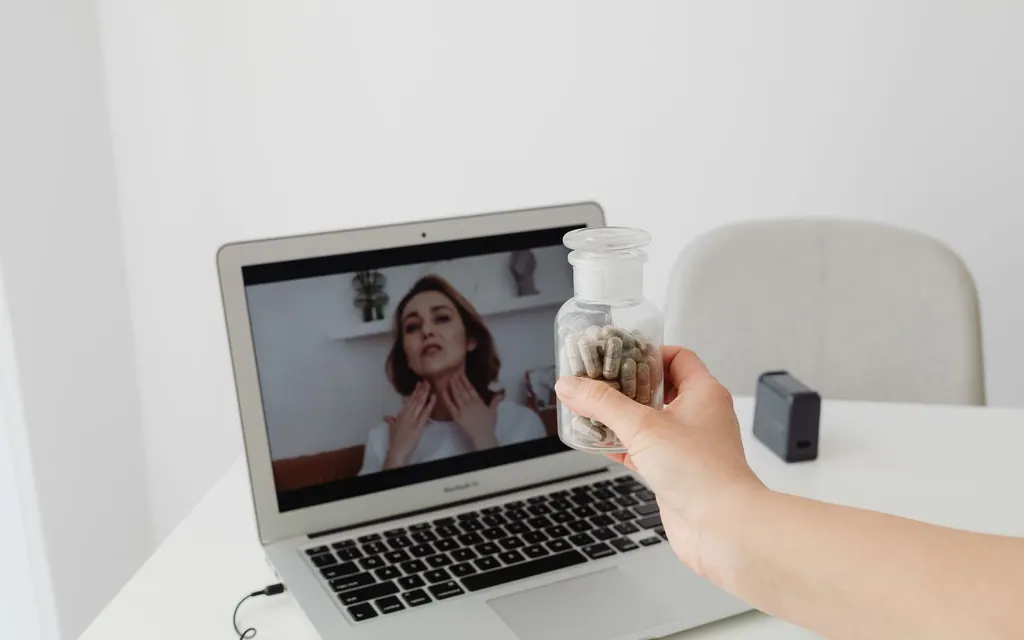
























Nutrition apps and AI tools can speed up food logging, analysis and admin, but they are not accurate enough to work unsupervised. A 2020 meta-analysis found image-based dietary assessment under-reported energy by about 179 kcal a day, and a 2026 study of AI-generated diet plans found calculation errors and poor reproducibility. Use them as aids to professional judgement.
Why this matters for your practice now
Your clients are already using nutrition apps and AI chatbots, often before they book with you. Some arrive with months of food logs; others arrive with a meal plan written by a chatbot and a question about why it is not working. At the same time, software for dietitians increasingly includes AI features for note-writing, recipe analysis and meal planning.
That creates three jobs for a dietitian: understanding what these tools can and cannot do, helping clients use them safely, and deciding which ones belong in your own workflow. This guide covers each, using published evidence and regulators' guidance. It deliberately does not rank or name products. Features and ownership change quickly, and any tool should be judged against the criteria below rather than a list.
The main types of tool
| Type of tool | What it does | Main strengths | Main risks |
|---|---|---|---|
| Food logging and calorie tracking apps | Records food, drink and portions; estimates energy and nutrients from a database | Self-monitoring, pattern spotting, data to discuss in sessions | Database errors, portion misjudgement, obsessive tracking |
| Photo-based food recognition | Estimates foods and portions from images | Faster than typing, less recall effort | Misidentified foods, hidden ingredients, under-reporting |
| Meal planning and recipe analysis | Builds menus, analyses recipes, produces shopping lists | Saves time on routine calculations | Generic plans that ignore culture, budget and medical needs |
| Condition companion features | Logs symptoms, glucose, medicine doses, protein or fibre | Links food to symptoms or readings | Over-reliance on single numbers; unclear accuracy of estimates |
| General-purpose AI chatbots | Answers questions, drafts meal plans and handouts | Fast drafting and explanation | Confident errors, inconsistent outputs, privacy |
| Practice software with AI features | Scheduling, notes, billing, transcription, client portals | Admin time saved | Data protection, accuracy of AI-written notes |
Our guide to dietitian software covers practice management systems in more depth.
How accurate are nutrition tracking apps?
No tracking method is perfectly accurate, and apps inherit the weaknesses of self-report. The clearest pooled evidence covers image-based methods. A 2020 systematic review and meta-analysis of 13 studies with 606 participants found image-based dietary assessment under-reported energy intake by about 179 kcal a day overall, and by about 448 kcal a day when compared against doubly labelled water, the reference method for energy expenditure. Protein and fat estimates did not differ significantly from comparison methods. The authors concluded that, like traditional methods, image-based methods "have serious measurement errors" (Ho and colleagues, Clinical Nutrition 2020).
In practice, accuracy depends on a few things you can check:
- The food database. Is it curated from national food composition data, or built from user-submitted entries? User-submitted entries are not checked in the same way, so look for duplicates and missing nutrients.
- Portion estimation. Most errors come from portion size, cooking oils, sauces and drinks.
- Local foods. Check how well the database covers regional and cultural dishes, especially if your clients' usual foods are not well represented in national food tables.
- Completeness. A log is only as good as what gets entered, so ask clients how consistently they record snacks, drinks and weekends.
So which app is "most accurate"? There is no reliable head-to-head evidence that settles it across foods and populations, and results from one study rarely hold for every cuisine. The better question is whether a tool is accurate enough for the decision you are making. Spotting that breakfast is routinely skipped needs little precision; adjusting carbohydrate to insulin needs a great deal more.
Do nutrition apps help people lose weight?
Modestly, on average. A 2026 meta-analysis of 23 randomised trials of apps targeting eating behaviour in adults found people using app-based interventions lost about 2.07 kg more than those on waiting lists and 1.64 kg more than those in non-app interventions at six months. Mean weight loss in app-based interventions at longer follow-ups was 2.64 kg. The authors found no moderating effect of calorie counting, social support, involvement of medical workers or automatic feedback, and said more long-term studies are needed (Arumäe and colleagues, Scientific Reports 2026).
Those results support apps as a useful adjunct, not a replacement for care. Dietitian-led weight management has its own evidence base, summarised in our guide to seeing a dietitian for weight loss. If a client wants a starting energy estimate to discuss with you, the calorie calculator gives a standard figure you can then individualise.
Do dietitians recommend calorie counting apps?
Some do, for some clients, and the honest answer is "it depends on the person". The worry is that detailed tracking may feed restrictive or obsessive eating.
The research is mixed. A 2025 systematic review of 27 studies found reasonably consistent cross-sectional associations between diet and fitness tracker use and disordered eating, including dietary restraint and excessive exercise, but the association was not replicated in experimental studies, so it is not possible to say trackers cause disordered eating (Moody and colleagues, European Eating Disorders Review 2025). A 2024 meta-analysis of weight-related self-monitoring in adults from the general population found no significant association with overall eating disorder scores, while noting that individual factors probably decide whether monitoring becomes harmful (Roth and colleagues, Appetite 2024).
The practical approach most consistent with that evidence:
- Screen first. Ask about past or current disordered eating before suggesting any tracking.
- Match the tool to the goal. Photo logs without numbers, or tracking a single behaviour such as vegetables or protein, may be enough.
- Set a time limit. Track for a defined period, then review whether it is still helping.
- Watch for warning signs. Anxiety when unable to log, rigid rules or guilt after eating are reasons to stop.
For clients with an eating disorder, follow the specialist team's plan; our guide to working with an eating disorder dietitian explains how that care is organised.
Calorie tracking is not neutral for everyone. If a client has a history of an eating disorder, or shows signs of one, do not recommend numeric tracking without discussing it with their treatment team.
Apps for people on GLP-1 medicines
If a client uses an app aimed at people taking GLP-1 medicines, it may include features such as protein and fluid tracking, dose and injection-site logs, symptom diaries for nausea or constipation, and weight graphs. These can be useful prompts, particularly for protein, which appetite loss can push down.
The limits are the same as for any tracker: protein estimates depend on database quality and portion accuracy, and a symptom log does not replace clinical review. Medicine doses must be managed by the prescriber, not adjusted on the basis of app advice. Our guide to protein on GLP-1 medicines sets out the nutrition priorities, which you can use to judge whether an app's targets are sensible.
AI chatbots versus dietitians
What the studies show
Generative AI can produce a plausible diet plan in seconds. Recent studies test whether the plans are right.
- A 2026 study compared diet plans for obesity with dyslipidaemia, hypertension or type 2 diabetes produced by three dietitians and by a general-purpose chatbot. Accuracy against official guidelines was comparable, 50% to 100% for the dietitians and 55% to 83% for the chatbot, but the chatbot never recommended a Mediterranean diet, and the authors noted its performance may be limited in specific ethnic groups. The authors stressed that human clinical judgement and interaction remain essential (Katsigiannis and colleagues, Journal of Nutrition 2026).
- A 2026 study used four general-purpose large language models, accessed through free web interfaces, to generate 216 daily menus for six women with polycystic ovary syndrome. No model achieved consistently low error across nutrients, one model overestimated energy by an average of 531 kcal, reproducibility was generally poor, and expert reviewers recorded safety red flags. The authors concluded that the findings "do not support their independent or unsupervised use" for individualised clinical nutrition advice (Çalık and colleagues, Nutrients 2026).
- In June 2024 the British Dietetic Association tested AI tools on 10 common dietary questions. The BDA found the tools offered some good, evidence-based insights and sometimes cited trusted sources, but several failed to recommend proper assessment, and one conflated a dairy allergy with lactose intolerance, leading to potentially unsafe advice (BDA). BDA Chair Caroline Bovey advised people to "use AI with caution and only once you have seen a dietitian".
Can AI replace a dietitian?
On current evidence, no. Chatbots can draft accurate general information, and sometimes match a dietitian on guideline adherence for straightforward cases. They do not take a history, notice what a client is not saying, examine, coordinate with a medical team or take professional responsibility. They also give different answers to the same question. Where AI does help is in reducing routine work: drafting handouts you then check, summarising literature you then verify, or structuring notes you then correct.
For clients, the main risk is that a chatbot's confident tone makes errors persuasive. Our guide to nutrition misinformation has tips for talking clients through advice they found online.
Regulation: when is an app a medical device?
In the US, the Food and Drug Administration's General Wellness guidance, revised in January 2026, sets out how the agency treats low-risk products that support a healthy lifestyle. It follows a 2016 change in law that removed certain software functions from the definition of a device when they are intended to encourage a healthy lifestyle and are unrelated to diagnosing or treating disease (FDA).
In plain terms, the claims matter. An app that encourages healthy eating is usually treated as a wellness product. A tool that claims to diagnose, treat or manage a disease, for example by recommending insulin adjustments, is more likely to be regulated as a medical device. "Not regulated" does not mean unsafe, and "regulated" does not mean every output is right, but you should know which category a tool claims to be in before you rely on it clinically.
Privacy: the question to ask before anything else
Food logs, symptom diaries and chat histories are health data. Before you use a tool with clients, or suggest one, check how it handles that data.
- United States. HIPAA applies to covered entities and their business associates. Many consumer health apps are outside HIPAA, but the Federal Trade Commission enforces its Health Breach Notification Rule for certain non-HIPAA businesses and treats unfair or deceptive data practices as violations of the FTC Act (FTC). If you are a covered entity, a vendor that handles client data on your behalf generally needs a business associate agreement. Our guide to HIPAA for dietitians covers this in detail, and the United States guide covers licensure.
- UK and EU. Health information is special category data under the GDPR, which prohibits processing it unless a specific condition in Article 9 applies (GDPR, EUR-Lex). The UK Information Commissioner's Office says organisations that profile people to infer their health status must identify an Article 9 condition (ICO).
- Elsewhere. Most countries have their own privacy laws. If you practise in Australia, for example, check national privacy obligations and Dietitians Australia's guidance alongside the Australia guide.
A simple working rule: do not paste identifiable client information into a consumer AI chatbot. Use de-identified examples, or tools covered by a contract that sets out how data is stored, used and deleted.
Professional guidance is catching up
Professional bodies have started to publish material for practitioners. The Academy of Nutrition and Dietetics and the American Society for Nutrition formed a joint taskforce for artificial intelligence, which published an AI and machine learning resource guide in the Journal of the Academy of Nutrition and Dietetics in August 2026 (Murofushi and colleagues, 2026). The Commission on Dietetic Registration has also introduced guidelines for the use of AI in continuing professional education, described in the same journal in September 2026 (Cavallo and colleagues, 2026). Check your own regulator and professional body for current guidance, because rules on documentation, consent and record-keeping still apply when software helps.
A checklist for evaluating any tool
Before adopting an app or AI tool, work through these questions:
- Purpose. What decision will it inform, and how precise does it need to be?
- Evidence. Has it been validated against a reference method, in a population like your clients?
- Database. Is nutrient data curated, and does it cover the foods your clients eat?
- Consistency. Does it give the same answer to the same input?
- Safety features. Are there safeguards for minimum energy intake, allergies, pregnancy and eating disorders?
- Regulatory status. Does it make medical claims, and is it regulated accordingly?
- Privacy. Where is data stored, who can access it, is it used to train models or sold, and can it be deleted?
- Bias. Has it been tested across sexes, ages, cultures and body sizes?
- Workflow. Can data be exported into your records, and does it save time once checking is included?
- Cost and lock-in. What happens to client data if you stop paying?
Track whether a tool actually changes results. Our guide to dietitian outcome measures suggests what to measure.
Where dietitians fit
The tools are getting better at the parts of nutrition care that are calculation and repetition. They are not getting better at the parts that are judgement, relationship and responsibility. That points to a clear role: dietitians as the people who choose the right tool for each client, interpret the data, correct the errors and hold the plan together.
There is also a business case. Clients increasingly expect app-based logging, secure messaging and remote check-ins. Our guides to building a nutrition business and running a dietitian private practice cover how to price and package that kind of support. Members of the public looking for a registered professional rather than an app can use our guide on how to find a dietitian, or book a session directly.
Frequently asked questions
Can AI replace a dietitian?
Not on current evidence. Studies in 2026 found chatbots can sometimes match dietitians on guideline adherence for simple cases, but they make calculation errors, give inconsistent answers and can produce unsafe advice, and authors did not support unsupervised use. AI cannot take a history, examine or take professional responsibility. It is most useful for drafting material a dietitian then checks.
Which nutrition app is most accurate?
There is no reliable evidence naming a single most accurate app across foods and populations. Accuracy depends mainly on the food database, portion estimation and how completely people log. A 2020 meta-analysis found image-based methods under-reported energy by about 179 kcal a day. Choose a tool validated in people like your clients, with a curated database.
Do dietitians recommend calorie counting apps?
Some do, for selected clients and goals, after screening for disordered eating. Reviews show associations between tracker use and disordered eating in surveys but no proof that tracking causes it, and no significant association overall in general-population adults. Many dietitians prefer simpler logs, time-limited tracking or no numbers at all for vulnerable clients.
Do nutrition apps help with weight loss?
On average, a little. A 2026 meta-analysis of 23 trials found app-based eating interventions led to about 2 kg more weight loss than waiting lists at six months, and about 1.6 kg more than non-app interventions. Apps work best as part of a wider plan, and long-term evidence is limited.
Is it safe to put client details into an AI chatbot?
Generally, no, unless the tool is covered by an agreement that protects health data. In the US, HIPAA-covered dietitians need business associate agreements with vendors handling client data. In the UK and EU, health data is special category data under the GDPR. Use de-identified examples with consumer chatbots.
Are nutrition apps regulated?
It depends on their claims. In the US, the FDA's 2026 General Wellness guidance treats low-risk products that encourage a healthy lifestyle differently from tools that claim to diagnose or treat disease, which may be regulated as medical devices. Privacy laws, such as the FTC's rules in the US and the GDPR in Europe, apply separately.