























Choose a supplement contract manufacturer by checking cGMP compliance (21 CFR 111 in the US, in force since 2007) and independent audits, identity and finished-batch testing, format capability, realistic minimum orders and a written quality agreement. The brand stays legally responsible: the FDA inspects firms that sell under their own label, not only factories.
What a contract manufacturer actually does
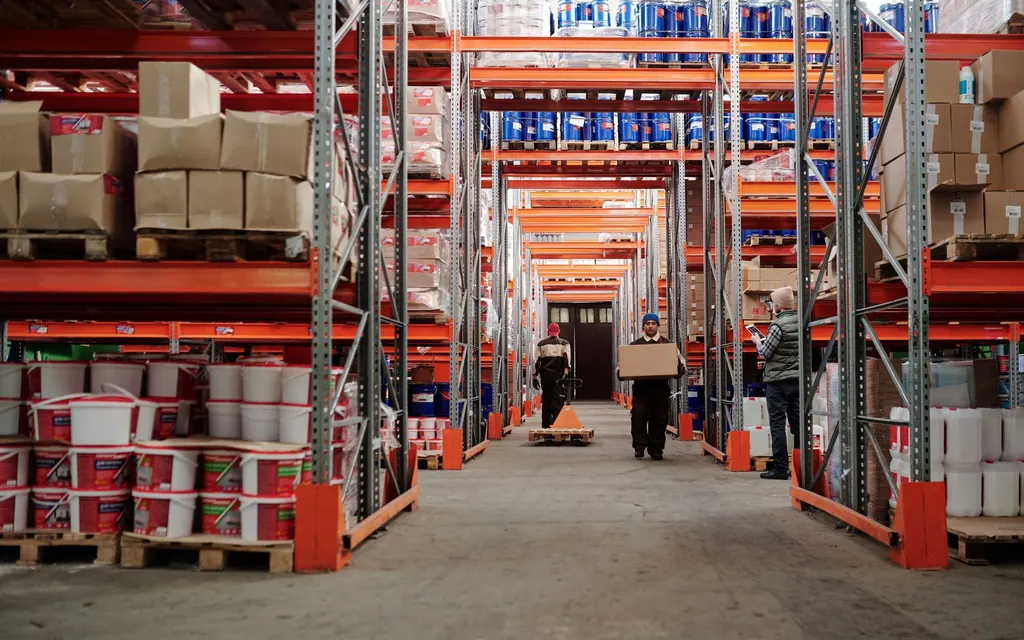
A contract manufacturer turns your formula into a finished product: it buys or receives the raw materials, tests them, blends, encapsulates, tablets, fills or bags them, packs and labels the product, and releases each batch. Some do all of that under one roof; others subcontract steps such as softgel encapsulation, gummies or packaging.
Three business models sit under the same label, and it is worth knowing which one you are talking to:
- Full-service contract manufacturing. You bring a concept or formula; the manufacturer helps with formulation, sources materials, makes and packs the product, and may support label review.
- Contract manufacturing to your specification. You supply a complete formula and specifications; the manufacturer makes it.
- Private label. You choose from the manufacturer's existing formulas and put your brand on the label. Faster and cheaper to start, with less control. Our guide to private-label supplement manufacturers covers that route in detail.
Our suppliers hub explains where manufacturers sit in the wider supply chain, from ingredient makers to distributors, and gives a short checklist. This guide goes further into the decisions that cause the most expensive mistakes: who carries legal responsibility, what certifications mean, how testing and minimum orders work, and how to compare quotes.
You stay responsible, even if you do not make the product
The single most important point for a new brand is legal, not commercial. In the United States, the Food and Drug Administration does not approve supplements before sale; the company that markets a product is responsible for its safety and labelling. Our guide to DSHEA and the FDA rules explains the framework.
The FDA's current inspection programme for supplements, Compliance Program 7321.008 (implemented 30 September 2024), includes a category for inspections of firms "responsible for introducing their own brand of finished products into commerce under 21 CFR part 111", alongside manufacturers, warehouses, packers and labellers. During inspections, investigators are told to identify who created and controls the formulas and label content, and "who are the firm's contract manufacturer(s)", including "any related quality agreements" (FDA, Compliance Program 7321.008, PDF).
In plain terms: if your name is on the label, the FDA can inspect you, ask how you chose and oversee your manufacturer, and hold you accountable for what is in the bottle. The cGMP rule itself applies to anyone who manufactures, packages, labels or holds a supplement, including products imported into the United States (21 CFR 111.1, eCFR).
That is why the contract is not just a price list. You need a written quality agreement that sets out who sets specifications, who tests what, who approves batch release, who keeps records and reserve samples, how changes are controlled, and who handles complaints, adverse event reports and recalls.
What certifications should a supplement manufacturer have?
Start with what is compulsory, then look at independent evidence that it is being done.
cGMP compliance is the law, not a certificate
In the United States, every manufacturer must comply with 21 CFR part 111, the dietary supplement cGMP rule the FDA published on 25 June 2007 and phased in for all company sizes by June 2010 (FDA, Small Entity Compliance Guide). Compliance is checked by inspection; there is no FDA certificate to frame. Be wary of anyone who says otherwise. The FDA warns: "Be cautious when a product is marketed as being manufactured in an FDA-approved facility; FDA does not approve facilities" (FDA, Avoiding Products Contaminated with Hidden Ingredients).
Ask instead for:
- the facility's FDA food facility registration (facilities that manufacture, process, pack or hold supplements for US consumption must register);
- the date and outcome of the most recent FDA inspection, and whether a Form FDA 483 was issued and how it was answered; the compliance programme says the FDA expects a firm to respond to a 483 within 15 business days of the end of the inspection;
- any warning letters, which the FDA publishes.
Independent GMP audits
Because there is no government certificate, many brands and retailers require an independent audit. Examples include GMP registration or certification audits run by standards bodies, and the USP Dietary Supplement Verification Program, whose facility audit checks compliance with USP General Chapter 2750 and 21 CFR part 111 before a finished product can carry the USP Verified Mark (USP, Dietary Supplement Verification Program). If you plan to sell to athletes, find out whether the plant already makes products under a sport certification scheme; our guide to third-party tested supplements explains what those schemes check.
Market-specific licences
If you plan to export, the manufacturer may need more than US cGMP. Health Canada says that "Canadian manufacturers, importers, labellers and packagers of natural health products must have site licences", with documentation showing that they follow appropriate GMP standards (Health Canada, natural health products information kit). In Australia, the TGA requires medicines on its register, including listed complementary medicines, to be made in accordance with GMP unless exempt (TGA, listed and registered complementary medicines). Check this before you choose a plant, not after; our supplement rules by country compare the frameworks.
Testing: who tests what, and when
Testing is where the quality agreement earns its keep. Under the cGMP rule, before using a component that is a dietary ingredient, the manufacturer must conduct "at least one appropriate test or examination to verify the identity" of it, unless the FDA has granted an exemption. For other components, it may rely on a supplier's certificate of analysis only after qualifying that supplier by confirming its results, keeping documentation and periodically re-confirming. Finished batches must meet product specifications, verified for a subset of batches chosen through "a sound statistical sampling plan" (21 CFR 111.75, eCFR).
The rule also requires specifications for identity, purity, strength and composition, and "limits on those types of contamination" that may adulterate the product (21 CFR 111.70, eCFR).
Questions that separate good manufacturers from adequate ones:
- Identity methods. Which method do you use for each botanical or specialty ingredient? A method that cannot tell a species from its cheaper relative is not identity testing.
- Contaminants. Which heavy metals, microbes, pesticides and solvents do you test for, at what limits, and on every lot or a sample?
- Potency at expiry. How do you set shelf life? Real-time stability data at the label claim, not just at manufacture, protects you from under-strength product late in its life.
- Who pays. Is testing included in the unit price, or billed per lot?
- Out-of-specification results. What happens if a batch fails: who decides, who pays, and how fast you hear.
What is a typical minimum order quantity?
There is no standard or regulated figure. Minimum order quantities (MOQs) are set by each manufacturer, and they follow from three things: the smallest batch the equipment can run efficiently, the minimum quantities raw-material suppliers will sell, and the cost of changeover and cleaning between products. That is why MOQs can differ sharply between formats and between plants, so ask for a figure for each format you are considering.
Treat any quoted MOQ as a starting point and ask:
- Is the MOQ per product, per flavour or per bottle size? Three flavours can triple your commitment.
- Who owns leftover raw material bought to meet the supplier's minimum, and who pays for it?
- Can the first run be smaller at a higher unit price?
MOQs also decide who carries quality and stock risk. A large first order locks cash into stock with a fixed expiry date. If something goes wrong, from a label error to a failed stability test, a bigger run means a bigger write-off, so negotiate how responsibility is shared before signing, not after a failure.
How much does it cost to manufacture a supplement?
Quotes vary too widely for a single benchmark to be honest, and published "average" prices are rarely sourced. What you can do is make quotes comparable by asking for the cost broken into its parts:
| Cost element | What drives it | What to ask |
|---|---|---|
| Raw materials | Ingredient choice, dose, form, market price | Are prices fixed for this order, and for how long? |
| Manufacturing | Format, batch size, complexity, overages | Is the overage for potency loss included? |
| Testing | Number of ingredients, methods, contaminant panel | Which tests are in the price, per lot? |
| Packaging | Bottle, closure, label, carton, desiccant | Who sources and who approves artwork? |
| Stability studies | Duration, conditions, number of time points | Real-time or accelerated, and who owns the data? |
| Set-up and changeover | New formula, new format, small runs | Is this a one-off or per run? |
| Freight, duties, storage | Origin, Incoterms, tariff classification | Who is the importer of record? |
Pricing models
Manufacturers generally price in one of two ways. Turnkey pricing means the manufacturer buys all materials and quotes a price per finished unit. Consigned (sometimes called toll) manufacturing means you supply some or all of the materials and pay for the service. Turnkey is simpler; consignment gives you control over sourcing but moves material risk, and testing obligations, onto you.
Reshoring versus manufacturing in Asia
Many brands source ingredients, finished products or both from Asia, particularly China; our China country guide covers the market there. If you are weighing domestic production against imports, tariffs are now a moving part of the calculation. We do not forecast them here, and rates can change quickly: the US International Trade Commission had already published 21 revisions of the 2026 Harmonized Tariff Schedule by the time of writing, the latest effective on 9 October 2026 (USITC, Harmonized Tariff Schedule). Check the current classification and rate for your exact product with a licensed customs broker before you compare quotes.
Beyond the duty rate, consider:
- Importer duties. Under the FDA's Foreign Supplier Verification Programs rule, importers of finished dietary supplements must meet most standard FSVP requirements, with verification focused on compliance with the supplement cGMP rule (FDA, FSVP final rule). If you import, that responsibility is yours.
- Inspection reach. The FDA's compliance programme covers both domestic and foreign supplement facilities, but your own audits are what give you day-to-day assurance.
- Lead times and working capital. Ocean freight adds weeks and ties up cash; a domestic plant may cost more per unit but less in stock held.
- Communication and change control. Formula changes, supplier substitutions and label revisions need a reliable route between you and the plant, whatever the time zone.
Reshoring is not automatically safer, and overseas manufacturing is not automatically riskier. The quality system, the audit trail and the contract matter more than the country. The United States country guide has more on the domestic market.
Questions to ask before you sign
- When was your last FDA inspection, and can we see the outcome and your response?
- Which independent audits or certifications do you hold, for which sites, and are any due for renewal?
- Do you make this format in-house, or subcontract any step?
- How do you test identity for each ingredient in our formula?
- Which contaminant tests are run on every lot?
- How is shelf life established, and will you share stability data?
- What is the MOQ per product, flavour and pack size, and who owns surplus materials?
- Will you sign a quality agreement setting out release, complaints, adverse events and recalls?
- Can we audit the site, announced and unannounced?
- Can we speak to two current clients of a similar size?
Red flags
- "FDA-approved facility" or "FDA-certified" in the sales pitch.
- Reluctance to share inspection history or audit reports.
- Identity testing that relies only on suppliers' certificates for dietary ingredients.
- No stability data, or shelf life set by assumption.
- An offer to make claims the label cannot support. Under US law, claims to treat or prevent disease make a product a drug, and in other markets the rules are stricter still.
Where dietitians fit
Registered dietitians and nutrition scientists are increasingly part of product development: checking doses against the evidence, reviewing claims, writing patient-facing materials and spotting interaction risks. Our guide to supplement companies working with dietitians looks at those roles. Once your product is made, you will also need a route to market; see our guide to supplement wholesale distributors. Trade shows remain the fastest way to meet several manufacturers in a week; our events calendar lists the main supplement and ingredient shows with dates checked on the organisers' sites.
Manufacturers, ingredient suppliers and brands can list on our member directory to reach dietitians and nutrition professionals worldwide.
Join the DieticiansWorldwide.com professional network
Frequently asked questions
How much does it cost to manufacture a supplement?
There is no reliable single figure, because cost depends on ingredients, dose, format, batch size, testing, packaging, stability studies and freight. To compare manufacturers fairly, ask each one to break the quote into these parts, state which tests are included per lot, and say how long raw material prices are fixed. Turnkey and consigned pricing models also move risk differently.
What certifications should a supplement manufacturer have?
In the US, compliance with the cGMP rule, 21 CFR part 111, is compulsory but is checked by FDA inspection rather than certified. Look for FDA facility registration, a clean inspection history and independent GMP audits, such as those required for USP verification. For export, check market-specific licences, such as Canadian site licences or Australian GMP for listed medicines.
What is a typical minimum order quantity?
There is no standard MOQ. Each manufacturer sets its own, based on efficient batch size for the equipment, suppliers' minimum material quantities and changeover costs, so MOQs vary widely by format and plant. Ask whether the MOQ applies per product, flavour or pack size, and who owns surplus materials.
Who is responsible if a contract-manufactured supplement is faulty?
Both parties can be. In the US, the cGMP rule applies to manufacturers, packers, labellers and holders, and the FDA inspects brand owners that sell finished products under their own label. A written quality agreement should set out who tests, who releases batches, and who handles complaints, adverse event reports and recalls, so responsibilities are clear before anything goes wrong.
Is manufacturing in the US better than in Asia?
Not automatically. Quality depends on the plant's systems, testing and your oversight, not its location. Overseas production can cost less per unit but adds lead time, tariff exposure and importer obligations under the FDA's foreign supplier verification rules. Domestic production can be faster and simpler to audit. Compare total landed cost and audit evidence, not unit price alone.
What is the difference between a contract and a private-label manufacturer?
A contract manufacturer makes your formula to your specification, or develops one with you. A private-label manufacturer sells its own ready-made formulas for you to brand, usually with lower minimums and shorter lead times but less control over ingredients and differentiation. In both cases the brand owner remains responsible for labelling, claims and compliance in each market.