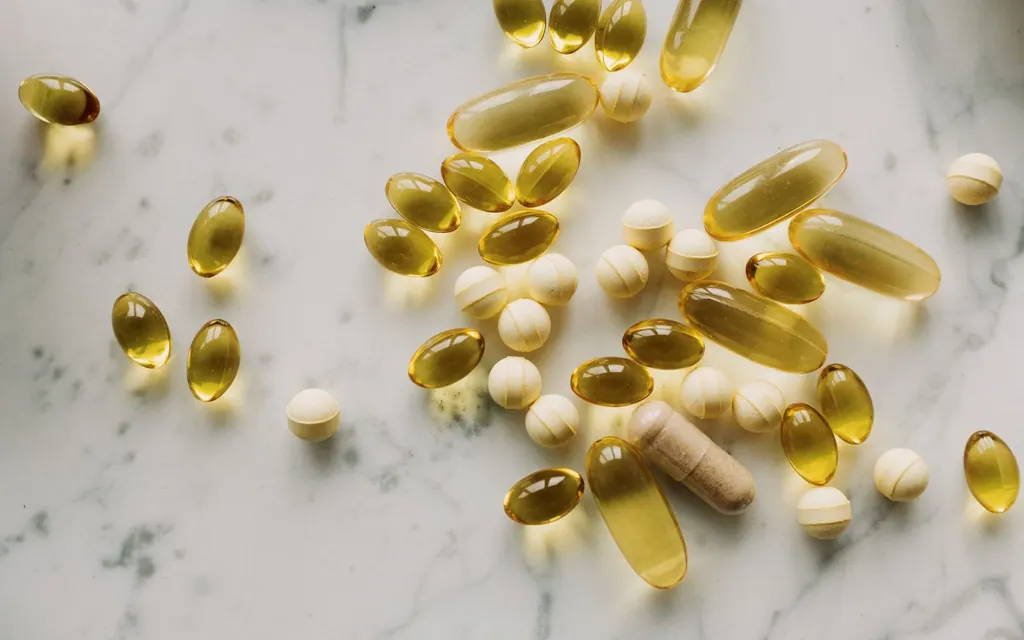
























Fish oil and algal oil both supply the long-chain omega-3s EPA and DHA, and in a 2008 trial DHA from algal oil was absorbed as well as DHA from cooked salmon. Most adults need about 250 mg of EPA plus DHA a day, the EFSA reference intake, or two portions of fish a week, one of them oily.
EPA, DHA and ALA: what you are actually buying
"Omega-3" covers three fats that behave very differently in the body.
- ALA (alpha-linolenic acid) is the plant omega-3, found in linseed (flaxseed), rapeseed (canola) and soybean oils, walnuts and chia seeds. It is the only omega-3 that is strictly essential.
- EPA (eicosapentaenoic acid) and DHA (docosahexaenoic acid) are the long-chain omega-3s. They are concentrated in oily fish, and DHA is a major structural fat in the brain and retina.
Your body can turn ALA into EPA and then DHA, but the US National Institutes of Health says the conversion "is very limited, with reported rates of less than 15%", so eating EPA and DHA directly "is the only practical way to increase levels of these fatty acids in the body" (NIH Office of Dietary Supplements).
The same fact sheet explains the point that makes algal oil possible: EPA and DHA "are originally synthesized by microalgae at the base of the marine food chain, not by the fish". Fish accumulate omega-3s by eating algae, or by eating smaller fish that did. Algal oil supplements skip the fish and take the oil from cultivated microalgae directly.
So the useful question about any product is not "how much omega-3?" or "how much fish oil?" but how many milligrams of EPA and DHA per daily dose.
How much omega-3 do you need?
No country sets a single "recommended dietary allowance" for EPA and DHA, so the advice you see depends on which body you read. The figures below are the ones most widely used.
| Who sets it | Recommendation | Applies to |
|---|---|---|
| European Food Safety Authority (EFSA) | 250 mg a day of EPA plus DHA | Adults |
| EFSA | An extra 100 to 200 mg a day of DHA on top of the adult 250 mg | Pregnancy |
| FAO | At least 300 mg a day of EPA plus DHA, of which 200 mg DHA | Pregnancy |
| UK Scientific Advisory Committee on Nutrition (SACN) | At least two portions of fish a week, one oily, providing about 0.45 g a day of long-chain omega-3 | Adults, including in pregnancy |
| US National Academy of Medicine | Adequate intake of ALA: 1.6 g a day for men, 1.1 g for women | Adults (no separate target for EPA or DHA) |
| EFSA and US FDA, upper safety view | Up to about 5 g a day of EPA plus DHA from supplements appears safe | Adults |
The EFSA, FAO and US figures are summarised in the NIH Office of Dietary Supplements fact sheet, last updated in August 2025. The UK figure comes from SACN's 2004 advice, which estimated that "two portions of fish per week, one white and one oily, contain approximately 0.45g/d LC n-3 PUFA" (SACN, Advice on Fish Consumption). The NHS uses the same rule and defines a portion as around 140 g (NHS, fish and shellfish).
Two things follow. First, the everyday target is modest: a few hundred milligrams a day. Second, it is easily met by food. NIH lists 3 ounces (about 85 g) of cooked farmed Atlantic salmon at 1.24 g DHA and 0.59 g EPA, which is several days' worth at the EFSA level in a single serving.
Fish oil vs algal oil, side by side
| Feature | Fish oil | Algal oil |
|---|---|---|
| Where the omega-3 comes from | Oily fish such as anchovy, sardine and mackerel, or fish livers (cod liver oil) | Cultivated microalgae |
| Typical content | About 180 mg EPA and 120 mg DHA per 1,000 mg capsule, but varies widely | Usually about 100 to 300 mg DHA per dose; some products add EPA |
| Main omega-3 | EPA and DHA | Mostly DHA; EPA varies by product |
| Chemical form | Natural triglycerides, ethyl esters or re-esterified triglycerides | Usually triglycerides |
| Mercury | Removed during processing and purification | Not exposed to ocean food chain |
| Extra nutrients | Cod liver oil also supplies vitamins A and D | None unless added |
| Suitable for vegans and vegetarians | No | Yes, if the capsule shell is plant-based |
Product content, form and mercury points are from the NIH fact sheet, which notes that omega-3 supplements "have not been found to contain" methylmercury "because it is removed during processing and purification". It also notes that re-esterified triglycerides, natural triglycerides and free fatty acids are "somewhat" better absorbed than ethyl esters, but that all forms "significantly" raise blood EPA and DHA. Krill oil carries omega-3s mainly as phospholipids; evidence on whether that improves absorption is mixed.
Prices vary widely between products, so compare them on cost per 250 mg of EPA plus DHA, not cost per capsule.
Is algal oil as good as fish oil?
For DHA, the best direct evidence says yes. In a two-week randomised study of 32 healthy adults, 600 mg a day of DHA from algal-oil capsules raised DHA in plasma by about 80% and in red blood cells by about 25%, the same increases seen with an equal amount of DHA from assayed portions of cooked salmon. The authors concluded the two were "bioequivalent" (Arterburn and colleagues, Journal of the American Dietetic Association 2008).
There are three caveats:
- It was small and short. Thirty-two people for two weeks shows absorption, not long-term health outcomes.
- EPA is the gap. Many algal products are DHA-only or low in EPA. The large heart trials discussed below mostly used EPA-rich fish oil or pure EPA, so you cannot assume an algal DHA capsule will reproduce them.
- Salmon is more than omega-3. Fish also supplies protein, vitamin D, iodine and selenium. A capsule replaces the fat, not the food.
For vegans, vegetarians and people who dislike fish, algal oil is the logical choice, and our healthy eating check will show whether the rest of a plant-based diet is covering protein, iodine and B12.
What the evidence shows for heart health
This is where most of the marketing sits, and where the evidence is most nuanced.
Over-the-counter doses
The 2020 Cochrane review is the largest assessment so far: 86 randomised trials with 162,796 participants, lasting 12 to 88 months (Abdelhamid and colleagues, Cochrane 2020). Increasing long-chain omega-3s had "little or no effect" on deaths from any cause (high-certainty evidence) or on cardiovascular events overall. It may slightly reduce coronary heart disease deaths and events (low-certainty evidence), with 334 people needing to take it to prevent one coronary death, and it lowered triglycerides by about 15%.
Two large 2018 trials of a 1 g daily capsule (460 mg EPA and 380 mg DHA) point the same way. In VITAL, with 25,871 older adults, the supplement did not significantly reduce the combined rate of heart attack, stroke and cardiovascular death over 5.3 years, although total heart attacks were 28% lower. In ASCEND, with 15,480 adults with diabetes, it did not reduce serious vascular events over 7.4 years (NIH Office of Dietary Supplements).
Prescription doses are a different product
REDUCE-IT gave 4 g a day of a purified prescription form of EPA (icosapent ethyl) to 8,179 people with heart disease or diabetes plus other risk factors, all already on statins with raised triglycerides. It cut major cardiovascular events by 25%. But STRENGTH, using a similar 4 g dose of a different EPA-plus-DHA formulation in 13,078 people, found no benefit and was stopped early. NIH says the reasons for the different results "are not clear".
Neither result tells you what an ordinary shop capsule will do. These are prescription medicines given under medical supervision, at four times the typical supplement dose.
The atrial fibrillation signal
High doses carry a risk. A 2021 meta-analysis of seven cardiovascular trials with 81,210 patients found omega-3 supplements raised the risk of atrial fibrillation, an irregular heart rhythm, by 25% overall, and by 49% in trials using more than 1 g a day (Gencer and colleagues, Circulation 2021).
More is not better. If you have heart disease, atrial fibrillation or are at high cardiovascular risk, do not take more than 1 g a day of omega-3 without asking your doctor, and never use supplements in place of prescribed heart medicines.
Brain, mood and pregnancy
Pregnancy has the strongest evidence. A 2018 Cochrane review of 70 trials with 19,927 women found omega-3s lowered the risk of preterm birth before 37 weeks from 13.4% to 11.9%, and early preterm birth before 34 weeks from 4.6% to 2.7%, both rated high-quality evidence (Middleton and colleagues, Cochrane 2018). It also found a probable small increase in pregnancies going beyond 42 weeks.
Memory and dementia have weaker evidence. NIH reports that some observational studies link higher omega-3 intake with less cognitive decline, but in the AREDS2 trial 350 mg DHA plus 650 mg EPA a day for five years did not affect cognitive function in 3,501 older adults, and supplements do not appear to help people who already have Alzheimer's disease.
Depression remains uncertain. A 2015 Cochrane review found "insufficient evidence" to say whether omega-3s help major depression in adults, according to the NIH fact sheet.
Food first or supplement first?
This is the main debate among dietitians, and both sides have a point.
The case for food first. UK and EU guidance is framed around eating fish, not taking capsules. The Cochrane review found most of the cardiovascular promise from early observational research has not been reproduced by supplements. Oily fish brings vitamin D, iodine, selenium and protein, and tends to replace less healthy foods on the plate. If you already eat salmon, mackerel, sardines, herring or trout once or twice a week, a supplement is unlikely to add much.
The case for a supplement. SACN noted in 2004 that most of the UK population does not eat enough fish, and the NHS still says "most of us are not eating this much". For people who never eat fish, for vegans, and in pregnancy for women who eat little fish, a supplement is a reasonable way to reach the reference intake.
The practical answer for most adults: eat oily fish once a week if you can; if you cannot or will not, a modest supplement supplying 250 to 500 mg of EPA plus DHA a day matches the guidance. There is no evidence that megadoses help healthy people, and some evidence that they carry risk. Omega-3 is one of several nutrients people commonly supplement; our guides to vitamin D supplements and iron supplements cover two others where testing and dosing matter. The wider supplements hub covers the industry and regulation.
Purity, oxidation and what labels do not guarantee
A supplement label is a manufacturer's promise, not a government certificate. In the United States, the FDA says supplement firms "are responsible for evaluating the safety and labeling of their products before marketing", and the FDA can act against a product "after it reaches the market" (US FDA). Our United States country guide explains how dietitians there are regulated and where they work.
Independent testing has repeatedly found gaps between label and bottle:
- In New Zealand, only 3 of 32 fish oil supplements contained at least the EPA and DHA stated on the label, 69% contained less than two-thirds of it, and only 8% met international limits for all oxidation markers. Price, country of origin and best-before date were "poor markers of supplement quality" (Albert and colleagues, Scientific Reports 2015).
- In Canada, 50% of 171 over-the-counter omega-3 products exceeded voluntary limits for oxidation, and children's products had higher oxidation levels than others (Jackowski and colleagues, Journal of Nutritional Science 2015).
These studies are a decade old and from two markets, so they do not prove today's products are poor. They do show why it is worth checking.
What a third-party seal does and does not tell you. Independent verification programmes test that a product contains what the label says and stays within contaminant and oxidation limits. That is useful. A seal does not tell you the product works, that the dose suits you, or that it is safe with your medicines. We do not recommend specific brands.
How to read a label:
- Find the EPA and DHA in milligrams per daily serving, which may be two or more capsules.
- Ignore the headline "1,000 mg fish oil": that is the oil, not the omega-3.
- Choose cod liver oil only if you want its vitamin A and D, and count those towards your limits.
- Store capsules away from heat and light, and discard any with a strong rancid smell.
Sustainability
Fish oil is made from wild-caught fish or from the by-products of fish processed for food. Algal oil is made from microalgae grown under controlled conditions, so it does not draw on wild fish stocks, which is one reason it appeals to people concerned about overfishing. Neither is impact-free, because both depend on how the producer sources its raw materials and energy. If sustainability matters to you, look for independent fishery certification on fish oil, or choose algal oil, and buy only the dose you need.
Who should not take fish oil without advice
Talk to a doctor, pharmacist or registered dietitian before taking omega-3 supplements if you:
- take warfarin or another anticoagulant, or antiplatelet drugs. NIH notes that fish oil can have antiplatelet effects at high doses and "might prolong clotting times" with warfarin, although most research finds 3 to 6 g a day does not significantly change anticoagulant control. Your INR may still need checking;
- have atrial fibrillation or heart disease, given the higher atrial fibrillation risk at doses above 1 g a day;
- are pregnant or trying to conceive. The NHS says to avoid fish liver oil supplements such as cod liver oil, because they are high in vitamin A, which "can be harmful to an unborn baby" (NHS). Ordinary fish or algal oil is different, but check the label;
- have a bleeding disorder, because NIH notes that doses of 2 to 15 g a day of EPA and/or DHA might increase bleeding time;
- are buying for a child, where doses and products need to be age-appropriate.
The NHS also says adults should not have more than 1.5 mg of vitamin A a day from food and supplements combined, which matters if you take cod liver oil alongside a multivitamin. Common side effects of omega-3 supplements are usually mild: an unpleasant taste, bad breath, heartburn, nausea, digestive discomfort, diarrhoea and headache.
If you are weighing up omega-3 alongside other products, such as collagen supplements or berberine, which our guide to berberine as "nature's Ozempic" examines, a dietitian can review your whole supplement list against your medicines and blood results. If you are not sure whether you need a dietitian, a pharmacist or a doctor, our guide to choosing a nutrition professional helps you decide. You can book a session with a registered dietitian for a personal review.
Book a session with a dietitian
Frequently asked questions
Is algae oil as good as fish oil?
For DHA, yes. A 2008 randomised study found DHA from algal-oil capsules raised blood DHA as much as the same amount of DHA from cooked salmon. Many algal products contain little EPA, though, and the big heart trials mostly used EPA-rich fish oil or pure EPA. Algal oil is the best option for vegans and people who do not eat fish.
How much omega-3 should I take daily?
For most healthy adults, about 250 mg of EPA plus DHA a day, the EFSA reference intake, or two portions of fish a week with one oily. In pregnancy, EFSA advises an extra 100 to 200 mg of DHA. Higher doses should be medically supervised, because doses above 1 g a day are linked to a higher risk of atrial fibrillation.
Who should not take fish oil?
Ask a professional first if you take warfarin or other blood thinners, have atrial fibrillation or heart disease, have a bleeding disorder, or are pregnant or trying to conceive. Pregnant women should avoid fish liver oils such as cod liver oil, which are high in vitamin A. Children's doses also need care.
Is it better to eat oily fish than take a supplement?
Usually, yes. Oily fish supplies EPA and DHA along with protein, vitamin D, iodine and selenium, and UK guidance is built around eating at least two portions of fish a week, one of them oily. Supplements make most sense for people who never eat fish, vegans, and pregnant women with low fish intake.
Do omega-3 supplements prevent heart attacks?
Not reliably at ordinary doses. The 2020 Cochrane review of 86 trials found little or no effect on deaths or cardiovascular events overall, with a possible slight reduction in coronary heart disease. A 4 g prescription EPA drug reduced events in high-risk patients on statins, but that is a medicine, not a shop supplement, and a similar drug failed in another trial.
Do fish oil supplements contain mercury?
According to the US National Institutes of Health, omega-3 supplements have not been found to contain methylmercury, because it is removed during processing and purification. Algal oil is not exposed to the marine food chain at all. Oxidation is the more common quality problem: independent studies have found many products exceed recommended oxidation limits.
What does EPA and DHA on the label mean?
EPA and DHA are the two long-chain omega-3 fats that matter for health. The label's headline figure, such as 1,000 mg of fish oil, is the total oil, not the omega-3. A typical 1,000 mg fish oil capsule provides about 180 mg EPA and 120 mg DHA, so always compare products on milligrams of EPA plus DHA per daily dose.